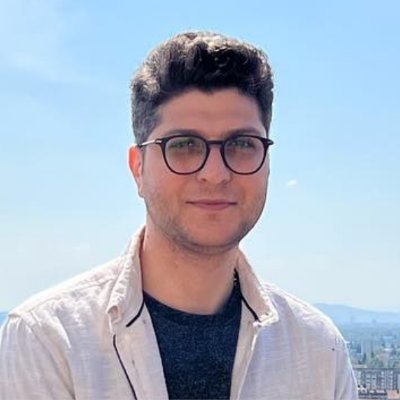
Kayhan Latifzadeh, PhD
Hello, world!
I'm Kayhan [kʲejhɒːn], a postdoctoral researcher at Neurofeedback Luxembourg and the University of Luxembourg, where I am an external member of the Computational Interaction (COIN) group.
I received my PhD in Computer Science (2026) from the University of Luxembourg, where I conducted my research in the COIN group under the supervision of Prof. Luis A. Leiva. I also hold a bachelor’s degree in Computer Engineering from the University of Guilan, Rasht, Iran, and a master’s degree in Artificial Intelligence and Robotics from SRTTU, Tehran, Iran.
I have been a visiting researcher at the Information eXperience (IX) Lab at the University of Texas at Austin, USA (Prof. Jacek Gwizdka); the Humans Interacting with Computers (HICUP) Lab at the University of Primorska, Slovenia (Prof. Klen Čopič Pucihar and Prof. Matjaž Kljun); and the Advanced Mixed Reality Interfaces Group at Graz University of Technology, Austria (Prof. Alexander Plopski).
My research focuses on decoding physiological signals to enhance human–computer interaction (HCI), with an emphasis on electroencephalography (EEG), eye tracking, and head and hand movement analysis. I investigate how multimodal physiological signals can be used to infer user states and support the design of adaptive and responsive interactive systems. My work spans several HCI domains, including visual attention modeling, skill assessment, affective computing, and cognitive load estimation, using machine learning methods to model and interpret these signals.
I have been serving as a reviewer for leading venues in HCI and related fields, including CHI, IUI, ISMAR, SIGIR, and CIKM.




News
- [2026-03-01]: Started Postdoctoral Position - I started a postdoctoral position under the FNR Industrial Fellowship programme, jointly hosted by Neurofeedback Luxembourg and the University of Luxembourg.
- [2026-02-05]: PhD Defense - I successfully defended my PhD thesis, "Decoding Cognitive States from Neurophysiological and Behavioral Signals." The thesis was supervised by Prof. Luis A. Leiva. The supervision committee included Dr. Jean Botev and Prof. Tuukka Ruotsalo, with external reviews by Prof. Tomas Ward and Prof. Andreas Bulling. The defense committee was chaired by Prof. Martin Theobald.
- [2026-01-15]: CHI’26 Paper Accepted - My paper, "Pixels, Plants, and People: Affective Evaluation of Urban Green Spaces," has been conditionally accepted for presentation and publication at the CHI 2026 conference. The paper is co-authored with Parvin Emami, Fariba Emami, Saravanakumar Duraisamy, and Luis A. Leiva.
- [2025-12-18]: FNR Industrial Fellowship Awarded - My proposal, CURATOR (Personalized Neurofeedback Treatment Recommendations), has been selected for funding under the FNR Industrial Fellowships scheme, a two-year postdoctoral grant worth up to €155k.
Selected Publications
- Kayhan Latifzadeh, Parvin Emami, Fariba Emami, Saravanakumar Duraisamy, Luis A. Leiva. (2026). Pixels, Plants, and People: Affective Evaluation of Urban Green Spaces. In Proceedings of the 2026 CHI Conference on Human Factors in Computing Systems. 1–22. [DOI][Code][Dataset]
- Kayhan Latifzadeh, Jacek Gwizdka, Luis A Leiva. (2025). A Versatile Dataset of Mouse and Eye Movements on Search Engine Results Pages. In Proceedings of the 48th International ACM SIGIR Conference on Research and Development in Information Retrieval. 3412–3421. [DOI][Code][Dataset]
- Mairo Villaizán-Vallelado, Matteo Salvatori, Kayhan Latifzadeh, Antonio Penta, Luis A Leiva, Ioannis Arapakis. (2025). AdSight: Scalable and Accurate Quantification of User Attention in Multi-Slot Sponsored Search. In Proceedings of the 48th International ACM SIGIR Conference on Research and Development in Information Retrieval. 255–265. [DOI][Dataset]
- Kayhan Latifzadeh, Luis A Leiva, Klen Čopič Pucihar, Matjaž Kljun, Iztok Devetak, Lili Steblovnik. (2025). Assessing Medical Training Skills via Eye and Head Movements. In Proceedings of the 33rd ACM Conference on User Modeling, Adaptation and Personalization. 1–10. [DOI][Code][Dataset]
- Kayhan Latifzadeh, Luis A Leiva. (2025). Thalamus: A User Simulation Toolkit for Prototyping Multimodal Sensing Studies. In Adjunct Proceedings of the 33rd ACM Conference on User Modeling, Adaptation and Personalization. 109–113. [DOI][Code]
- Syrine Haddad, Kayhan Latifzadeh, Saravanakumar Duraisamy, Jean Vanderdonckt, Olfa Daassi, Safya Belghith, Luis A. Leiva. (2024). Good GUIs, Bad GUIs: Affective Evaluation of Graphical User Interfaces. In Proceedings of the 32nd ACM Conference on User Modeling, Adaptation and Personalization (UMAP). [DOI]
- Kayhan Latifzadeh, Nima Gozalpour, V Javier Traver, Tuukka Ruotsalo, Aleksandra Kawala-Sterniuk, Luis A. Leiva. (2024). Efficient Decoding of Affective States from Video-elicited EEG Signals: An Empirical Investigation. ACM Transactions on Multimedia Computing, Communications and Applications. ACM New York, NY. [DOI]
- Kayhan Latifzadeh, Luis A. Leiva. (2022). Gustav: Cross-device Cross-computer Synchronization of Sensory Signals. In Adjunct Proceedings of the 35th Annual ACM Symposium on User Interface Software and Technology. 1–3. [DOI]
- Reza Sarailoo, Kayhan Latifzadeh, S Hamid Amiri, Alireza Bosaghzadeh, Reza Ebrahimpour. (2022). Assessment of instantaneous cognitive load imposed by educational multimedia using electroencephalography signals. Frontiers in Neuroscience. 16, 744737. Frontiers. [DOI]
Academic Service
- Student Volunteers Co-Chair - 2024 ACM conference on Conversational User Interfaces (CUI '24), Luxembourg City, Luxembourg, 8 to 10 July 2024
- Student Volunteer - The 8th Summer School on Computational Interaction (CIX'24), Belval, Luxembourg, 3 to 7 June 2024
- Student Volunteer - 2023 ACM Conference on Human Factors in Computing Systems (CHI '23), Hamburg, Germany, 23 to 28 April 2023
Honors and Funding
- FNR Industrial Fellowship - Two-year postdoctoral grant (2026-2028, up to €155k) funded by the Luxembourg National Research Fund (FNR).
- Best Late-Breaking Paper Award Nominee - UMAP’25
Talks
- PhD Talk: Decoding EEG and Eye-movement Signals in Human-Computer Interaction (HCI)
Institute of Computer Graphics and Vision, Graz University of Technology
Graz, Austria, April 25, 2025
Teaching
- Web Development 1
JavaScript Fundamentals
Faculty of Science, Technology and Medicine (FSTM), University of Luxembourg
Belval, Luxembourg, 2022-2026 - Human-Computer Interaction (HCI)
Guest Lecturer: Delivered a talk on the affective evaluation of graphical user interfaces.
Faculty of Science, Technology and Medicine (FSTM), University of Luxembourg
Belval, Luxembourg, 2024-2025
Alumni
- Hugo Barthelemy - Research and Teaching Assistant, University of Luxembourg, 2023-2026
- Fredrik Oliver Spratling - Bachelor Semester Project, University of Luxembourg, 2026
- David Pereira de Magalhaes - Bachelor Semester Project, University of Luxembourg, 2025
- Saad Shakeel - Bachelor Semester Project, University of Luxembourg, 2024
- Giorgos Kotsias - Bachelor Semester Project, University of Luxembourg, 2024
- Joao Bernardo Sousa Faria - Bachelor Semester Project, University of Luxembourg, 2024
- Karyna Ouahrani - Bachelor Semester Project, University of Luxembourg, 2023